


CAS Design and Communication of Educational Programmes
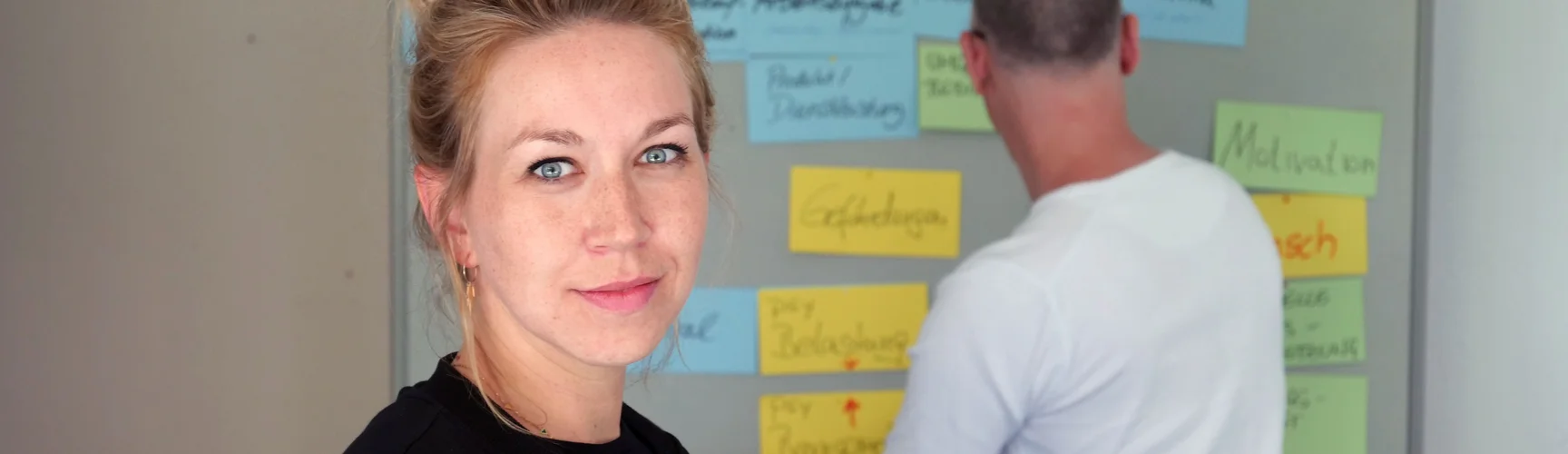
The Certificate Programme (CAS) covers recurring tasks involved in the development, planning, presentation and promotion of educational programmes for adults. Going beyond the delivery of individual sessions, it focuses on the organisation and management of collaborative learning and working processes, particularly in project-based formats. Tailored to local authority, workplace and academic contexts, educational programmes form the subject of programme development and planning. The course concludes with models and strategies for educational communication.
- Registration deadline
- 15 November 2026
- Duration of study
- one term
- Scope
- 15 CP
- Qualification
- Certificate of Advanced Studies (CAS)
- Start of studies
- 15 January 2027
Target audience
The certificate programme is aimed at individuals who, as part of their professional roles, are responsible for continuing professional development and training, and who wish to acquire expertise in educational science at Master’s level. It can also be undertaken to deepen prior knowledge of educational science within the context of adult education.
Outlooks
The certificate programme
- is designed to provide an in-depth academic understanding of the organisational and communicative aspects of adult and continuing education, and
- structures and outlines typical cross-cutting tasks in professional educational practice.
Entry requirements
Entry requirements for this CAS programme are
- a first degree or proof that you have acquired the necessary aptitude in some other way;
- at least one year’s professional experience in the field of education, as a general rule.
Application
Please send your application and the required documents by email to the Centre for Academic Continuing Education.
Legal basis
Organisational consultancy
Organisation
Karlsruhe University of Education
Building
2
Room
A023
Phone
Learning outcomes and skills
The participants...
- recognise the growing importance of collaboration and exchange in learning and work processes.
- are familiar with concepts of cooperative learning.
- use cooperative processes for project work and project management.
- develop the basic principles of programme and course planning.
- become familiar with findings from programme research.
- are familiar with typical application and reporting requirements.
- reflect on market structures in the education sector.
- assess marketing measures using established models.
- design a communication strategy for their educational provision.
- clarify their professional expectations regarding effectiveness.
Course structure and dates
The certificate programme is designed to be undertaken alongside work, concludes with a written examination and lasts one semester. It comprises three face-to-face sessions, supplemented by digital learning modules and self-study periods. All face-to-face sessions take place at weekends – on Fridays from 9:00 am to 5:00 pm and on Saturdays from 9:00 am to 3:00 pm.
| Module component | CP | Date |
|---|---|---|
Seminar 1: Effective Communication: Public Relations and Educational Marketing Continuing education and professional development programmes must be described and justified in a variety of ways: for the target audience, for external stakeholders and reference groups, but also internally for the purposes of management, promotion and advisory services. The communication requirements vary considerably in this regard. Communication strategies ensure a strategic link between public relations and educational marketing. Key topics covered in the seminar include promotional materials, online marketing, grant application texts and press releases. | 5 | 15–16 January 2027 |
Seminar 2: Working Together: Cooperation and Projects Cooperation is becoming increasingly important in adult education. That is why it must also be learnt. Further training courses provide a suitable setting for this. The seminar will demonstrate forms of cooperative learning and allow participants to try them out for themselves. These cooperative methods will be integrated into project work, as this too is a key focus in working with adults | 5 | 29–30 January 2027 |
Seminar 3: Planning to Meet Needs: Course and Programme Development Educational provision and its delivery formats are regularly subject to review, not least in the context of digitalisation. They are the subject of ongoing processes of provision development and programme planning, in which various stakeholders and interests interact. The seminar presents selected models, tools and examples of these planning processes. Particular emphasis is placed on the development of educational programmes within externally funded projects. | 5 | 19–20 February 2027 |
Programme management and academic advice
Organisation
Karlsruhe University of Education
Building
2
Room
B304
Phone
Availability
By arrangement
Programme Coordinator
Organisation
Karlsruhe University of Education
Building
2
Room
B304
Phone
Availability
By arrangement via email
Fees
The total fee is 1,300 euros. This includes the following services:
- Face-to-face seminars and e-learning modules,
- advice and support from the lecturers throughout all stages of the course,
- use of the university’s information and communication platform, and
- a recognised certificate (Certificate of Advanced Studies) upon successful completion of the programme.
Legal basis for fees
Leaflet
Any questions?
Our Centre for Academic Continuing Education is here to advise you on all matters relating to admission, the organisation of your studies, funding and the recognition of prior learning.

Centre of Continuing Education
Organisation
Karlsruhe University of Education
Building
2
Room
A023
Phone
Updated on 22 October 2026 by Central Web Editorial Office