


Department of Economics and its Didactics
The Department of Economics and its Didactics is dedicated to teaching and research in the field of economic education. Its aim is to provide competence-based training for teachers of the new school subject ‘Economics, Career and Study Guidance’ (WBS).
Our work focuses on career guidance – in particular, gender-equitable and digital career guidance – entrepreneurship education, and economic education in museums.
Our institute has an international focus in both teaching and research. We offer international summer schools and carry out international projects. At the same time, the institute is firmly rooted in the local community.
Karlsruhe Papers on Economic Education
This series publishes, in particular, academic papers from the fields of business education, such as entrepreneurship education, career guidance, general financial literacy and digitalisation.
-
Karlsruhe Papers on Economic Education – Paper No. dated 1 October 2022
Post 1:
Bitterberg, S., Frentz, J., & Wiepcke, C. (2022). On the development of sustainability-oriented business models in economics lessons – an evaluation of the Triple-Layered Business Model Canvas as a method for sustainable entrepreneurship education in schools, In: Karlsruhe Contributions to Economic Education, 1, pp. 1–33.
-
Wiepcke, C. (2023). Competence Framework for Digital Career Guidance (DigiBOKom), in: Karlsruhe Contributions to Economic Education, 2, pp. 1–27.
Post 2:
Wiepcke, C. (2023). Competence Framework for Digital Career Guidance (DigiBOKom), in: Karlsruhe Contributions to Economic Education, 2, pp. 1–27.
-
Brüggemann, Wiepcke, C. (2023). Evaluation criteria for digital educational initiatives, using career guidance as an example, in: Karlsruher Beiträge zur Ökonomischen Bildung, 3, pp. 1–27.
Post 3:
Brüggemann, Wiepcke, C. (2023). Evaluation criteria for digital educational initiatives, using career guidance as an example, in: Karlsruher Beiträge zur Ökonomischen Bildung, 3, pp. 1–27.
-
Konrad, J., Wiepcke, C. (2025). The potential of service learning for inclusive social entrepreneurship education, in: Karlsruhe Papers on Economic Education
Post 4:
Konrad, J., Wiepcke, C. (2025). The potential of service learning for inclusive social entrepreneurship education, In: Karlsruhe Contributions to Economic Education
Research and Projects
The megatrend of digitalisation requires pupils to develop skills in both entrepreneurial thinking and action and in the use of technology, particularly in STEM subjects. Entrepreneurial IT education has so far been scarcely practised in schools. Appropriate teaching and learning measures are needed to empower young people to effectively shape societal challenges and drive STEM innovations. The aim of the collaborative project between the Institute of Economics and the Institute of Computer Science and Digital Education is to enrich IT education in schools with entrepreneurial thinking and action.
The project is aimed at pupils studying STEM subjects in Years 7 to 10 of lower secondary school, and at teachers of STEM subjects. Full details of the project.
At the heart of the project lies the question of how the quality of tasks in digitally supported teaching can be improved, thereby maximising its potential.
The starting point for the project within the Department of Economic Education is the premise that people are constantly making decisions and, in doing so, do not generally behave rationally in the sense of neoclassical economic theories and models. Human decision-making behaviour is influenced by emotions and automatic responses rooted in cultural and biological evolutionary processes, which often occur unconsciously or reactively. In behavioural economics, these decisions are investigated using experiments that can also be incorporated into digitally supported tasks in economics lessons. The aim of the research project is to systematise (or, where necessary, develop) digital behavioural economics experiments for school education and to empirically validate their digital implementation.
The project is being carried out in cooperation with the University of Tübingen (Prof. Dr Taiga Brahm) and the Baden-Württemberg Ministry of Science, Research and the Arts (MWK).
As part of the project, training and process support modules are being developed, piloted and evaluated to enable arts and cultural organisations to develop institutional and individual capacities to tackle current (e.g. the COVID-19 pandemic) and future challenges.
In cooperation with Prof. Dr Lutz Schäfer, Institute of Art, and Heidelberg University of Education
As part of the project, research is being carried out into the possibilities and conditions for the successful subject-specific use of digital media; subject-specific application options are being identified, conceptually underpinned and developed for all phases of teacher training. Further information on InDiKo (Integration of subject-specific digital teaching and learning concepts) and the associated projects can be found on the InDiKo project page.
Project results:
The first project outcome is the creation of a wiki by students. The wiki articles created by the students on various topics relating to career guidance are available via the following link.
Another project outcome is a virtual reality (VR) space for career guidance. The seminar project is supported by four business informatics students from the Karlsruhe Cooperative State University. Students at the Karlsruhe University of Education are being introduced to the design possibilities of a VR space and, working in groups, are developing a VR environment with content on the topic of career guidance. You can find an insight into the project homepage here (screenshots).
The Erasmus mobility programme facilitates exchanges between students and teaching staff at the Karlsruhe University of Education (PH Karlsruhe) and its partner institution, the University of Humanities (PUA – People’s Ukrainian Academy) in Kharkiv, Ukraine. Further information on the Erasmus+ project can be found on this poster.
One of the project’s components is the organisation of joint summer schools aimed at developing social business ideas that address specific regional social issues.
Developmental research into the design of a subject-specific, empirically validated and gender-equitable STEM career guidance programme.
Developmental research into the design of a subject-specific, empirically validated and gender-equitable STEM career guidance programme.
As part of the MuWi project, teaching and learning materials for economics education in schools are being developed, based on specific exhibits from museums in the region.
As part of the MuWi project, teaching and learning materials for economics education in schools are being developed, based on specific exhibits from museums in the region.
Doctoral Programme
Participating universities:
Karlsruhe University of Education (Prof. Dr Dr h. c. Claudia Wiepcke, Institute for Economics and its Didactics) and South Westphalia University of Applied Sciences (Prof. Dr Dr h. c. Ewald Mittelstädt)
The Doctoral Programme in Economics and Economic Education focuses in particular on supervising empirical research projects in the applied fields of economics education, such as entrepreneurship education, financial literacy, career guidance and digitalisation. The programme focuses on innovative projects at the interface between economics and educational science. What sets this doctoral programme apart is its commitment to providing application-oriented answers to research questions relevant to economic and educational practice, thereby facilitating an in-depth transfer of theory into practice.
A key aim of the doctoral programme is to systematise the training of doctoral candidates. Through a structured programme, doctoral candidates are offered excellent conditions for their dissertation projects. These include information sessions for prospective doctoral candidates, reliable and regular guidance throughout the doctoral process, training in research design and methodology, and collegial exchange at both national and international levels. Key initiatives include the biannual research coaching workshop and the strategic partnership with the German Society for Economic Education.
You can find the structure of the doctoral programme here.
The Research College was launched in 2015; currently, 10–15 doctoral candidates and one postdoctoral researcher participate on a regular basis. The doctoral theses produced within the framework of the Research College are published in the Springer/Gabler book series ‘Economics and Economic Education’.
Teaching
Degree programmes
- Bachelor's Degree Programme in Primary School Teaching Profession
- Master's Degree Programme in Primary School Teaching Profession
- Bachelor's Degree Programme in Lower Secondary Teaching Profession
- Master's Degree Programme in Lower Secondary School Teaching Profession
- Master's Degree Programme in Lower Secondary School Teaching Profession, Additional Subject
- Bachelor's Degree Programme in Physical Activity, Health and Recreation
- University Certificate in Career Guidance
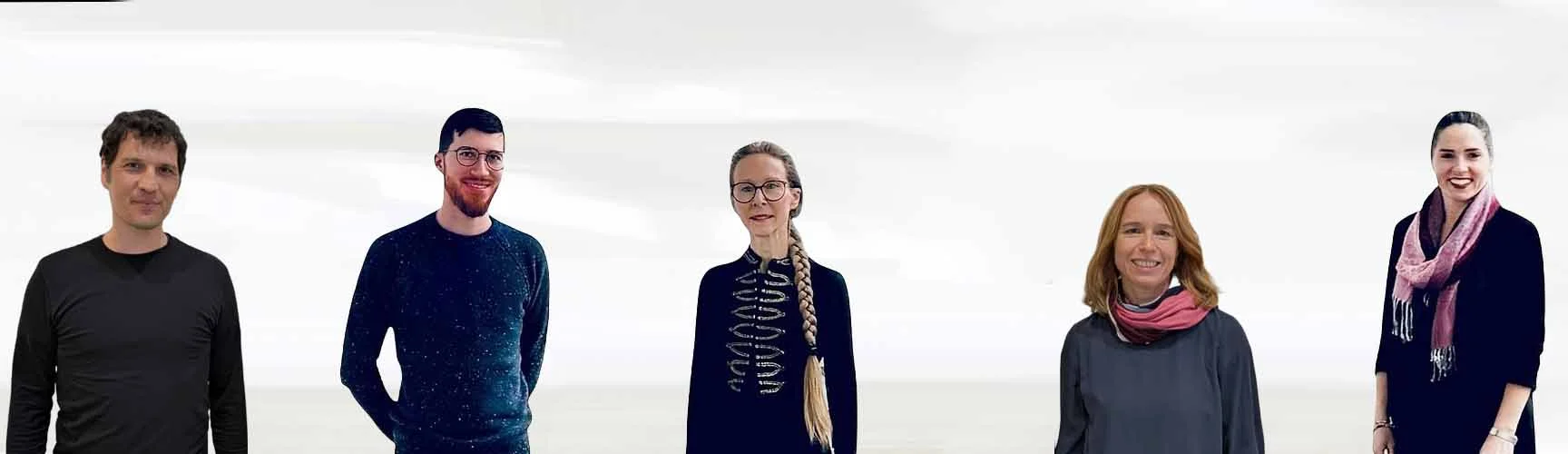
Institute team
Organisation
Karlsruhe University of Education
Building
4
Room
408
Phone
Availability
By arrangement
Organisation
Karlsruhe University of Education
Building
4
Room
418
Phone
Availability
By arrangement
Organisation
Karlsruhe University of Education
Building
4
Room
413
Availability
By arrangement
Updated on 23 October 2026 by Central Web Editorial Office