


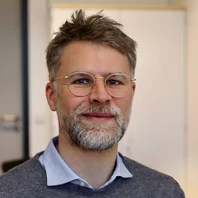
Prof. Dr.
Martin Neugebauer
I am Professor of Sociology of Education and Director of the Department of Empirical Educational Research at the University of Education Karlsruhe.
My research focuses on questions that are not only of academic interest but also of broad societal relevance. Why are children from non-academic families less successful in the education system, and what can be done about it? Who becomes a teacher—and why? What are the economic and socio-emotional consequences of college non-completion? Do students with a migration background benefit from teachers with similar backgrounds? I address these and related questions from an empirical-analytical perspective. I conduct quantitative studies and statistical analyses to better understand educational processes and inequalities. What motivates my work is the aim to bring greater clarity and evidence into academic and public debates in education and higher education, and to contribute to more informed decision-making. My work has been published in journals such as Sociological Science, Social Science Research, and European Sociological Review.
I studied Social Sciences (Sociology) at the University of Mannheim and the University of Toronto and worked as a researcher at the Mannheim Centre for European Social Research (MZES). My doctoral thesis on selection into the teaching profession and teacher effects in the production of educational inequality was awarded the Bojanovsky Prize at the University of Mannheim. After completing my PhD, I worked as Postdoc Fellow at MZES and later as an Assistant Professor of Empirical Educational and Higher Education Research at Freie Universität Berlin.
Department of Empirical Educational Research - Department Director
Professor
Prof. Dr. Martin Neugebauer
Department of Empirical Educational Research - Department Director | Professor
Organisation
Karlsruhe University of Education
Building
2
Room
B306
Phone
Availability
By arrangement
Current Projects
StuPsy - Mental health during studies and doctoral studies: problems and solutions, Federal Ministry of Research, Technology and Space (BMFTR), 2026 - 2028
Taking a life-course perspective, the project investigates the development, determinants, and effects of mental health throughout undergraduate, graduate, and doctoral studies. It adopts a multidimensional understanding of mental health, encompassing clinical (sick leave days, mental disorders), cognitive (well-being, life satisfaction, general health status), and affective dimensions (perceived stress and psychological strain). The analyses draw on nationally representative, predominantly longitudinal secondary datasets from Germany (NEPS, SLC, SeSaBa, SiD, Nacaps). The project is conducted by a research consortium involving the German Centre for Higher Education Research and Science Studies (DZHW), the University of Hagen, Karlsruhe University of Education, and the University of Galway, together with practice partners from the German National Association for Student Affairs (Deutsches Studierendenwerk) and the German Academic Exchange Service (DAAD).
More information is available here.
LINEup - Longitudinal Data for Inequalities in Education, EU Horizon Europe, 2024 – 2027
The project aims to identify key factors contributing to high-quality education for all. An international consortium is mapping, analysing, and synthesising existing longitudinal data from 31 European countries to trace the development of educational inequalities throughout students’ school careers across Europe. This quantitative analysis is complemented by qualitative research in the participating countries, collecting primary data on the potential of different measures to reduce educational inequalities. The focus is on gaining a better understanding of what schools can do to reduce inequalities in the short, medium, and long term.
More information is available here.
Research training group "Task Quality in Digitally Supported Teaching" (AQUA-d), Baden-Württemberg Ministry of Science, Research and the Arts, 2026 – 2029
Together with Prof. Nicolas Hübner (University of Bonn), I investigate the potential of artificial intelligence (AI) to promote fair assessment of student performance in schools. The AQUA-d research consortium is led by Prof. Samuel Merk (University of Tübingen).
More information is available here.
Documents and links
Updated on 23. Oktober 2026 by Martin Neugebauer